FEATURES
They say only write what you know. They also say you don't truly know something until you can explain it to someone else. These two ideas are central to how I assemble my research, conduct my interviews and assemble the story for my readers. Without fail, I get extremely passionate about the subjects I write about, but I've learned to direct that passion so, hopefully, the writing reflects that.
AUBURN Magazine
As Assistant Editor of Auburn Magazine, I had the endless thrill of interviewing people who all share a very distinct bond with myself: we're all Auburn people. An old school that breeds a certain type of practical, roll-up-your-sleeves type of people, members of the "Auburn Family" are scattered throughout the world in every field and industry. Humble to a fault, the hardest part is finding these fascinating Auburn people, but once we sit down to interview I am always amazed at the various twists and turns their lives and careers take after graduation. As diverse as graduates and alumni are, their shared origins at Auburn unite people in ways that are difficult to describe; one only needs to step on campus on a Fall Saturday during a home football game to see how much it means to them.

There’s only 32 in the world, and Auburn can claim two.
Los Angeles Rams General Manager Les Snead ’94, a former Auburn football player, was a pro scout for the Jacksonville Jaguars and Atlanta Falcons before serving as the Falcons’ director of player personnel. In 2012 he was named general manager of the St. Louis Rams, helped move the team to LA and made two Super Bowls, winning one in 2021.
General Manager Joe Hortiz ’98, previously the director of player personnel for the Baltimore Ravens, spent more than 20 years with that organization, winning Super Bowls in 2000 and 2012. He was appointed general manager of the Los Angeles Chargers in January 2024.
Auburn Magazine brought these two general managers, competitors—and friends—together to discuss life in the pressure cooker of pro football.

Water—the foundation of all life on our planet—is a hard-won luxury in the world’s poorest regions. One group of Auburn alumni is working to change that.

NASA attorney Dawn Oliver '97 got an inside look at the U.S. Government as part of the prestigious White House Leadership Development Program.

Roads crack. Bridges crumble. Sewage leaks and power grids fail. America’s infrastructure is falling apart. Auburn alumni and faculty discuss the problems and solutions to a national crisis.

Under the head coach for the U.S. National Wheelchair Basketball Team, adaptive sports are getting a boost from the Auburn Family. (From Auburn Magazine Fall 2023)

A former nurse helps Michigan’s homeless create a new beginning, one piece of furniture at a time


For decades, Auburn’s Rugby Club fought for relevance as much as victory. Then they were national champions.


In days of old, Boy Scouts ushering fans to their seats were a common sight at Auburn football games. What happened?

Josh Williams ’18 was born—and almost died—in Piedmont Atlanta Hospital. He just returned to help build its newest addition.


International human rights are not just theoretical for Leila Rassekh-Milani ’89—they guide her global fight for justice and humanity







TAMPA Magazine
Florida—and more specifically, my hometown of Tampa—occupy a place in my heart and in my mind that only thickens the more I learn about it. Through TAMPA Magazine, a publication I joined while still in its infancy, I was able to explore my homeland through its history and its sensory details. This latter part, in particular, came just as Tampa exploded (extreme emphasis) as a gastronomical and oenological paradise. Whatever your views on "Foodie" culture are, Tampa has it in spades and I have the enviable task of trying to stay on top of it all despite new restaurants, bars and snack spots opening up around town. I love writing about Tampa almost as I love the city itself and constantly look for story ideas that other Tampanians (yes, we call ourselves that) would find helpful, enlightening, thought-provoking or at least solve the nightly crises of where to get dinner. My job didn't get any easier when we expanded to include all of Tampa Bay, from the Gulf to the interior of Central Florida, but I wouldn't have it any other way.

Nothing is off-limits, and convenience and customization are the names of the game when upgrading your home.

Floridians are spoiled with weather akin to tropical paradise year-round. But how much potential enjoyment goes to waste? Empty backyard spaces are untapped extensions of the home, capable of transforming into sunlit kitchens, poolside lounges, outdoor grills and more.

Artists spend whole lifetimes turning their inner visions into real life; Japanese artist Yayoi Kusama goes one step further, inviting visitors to literally walk around her imagination
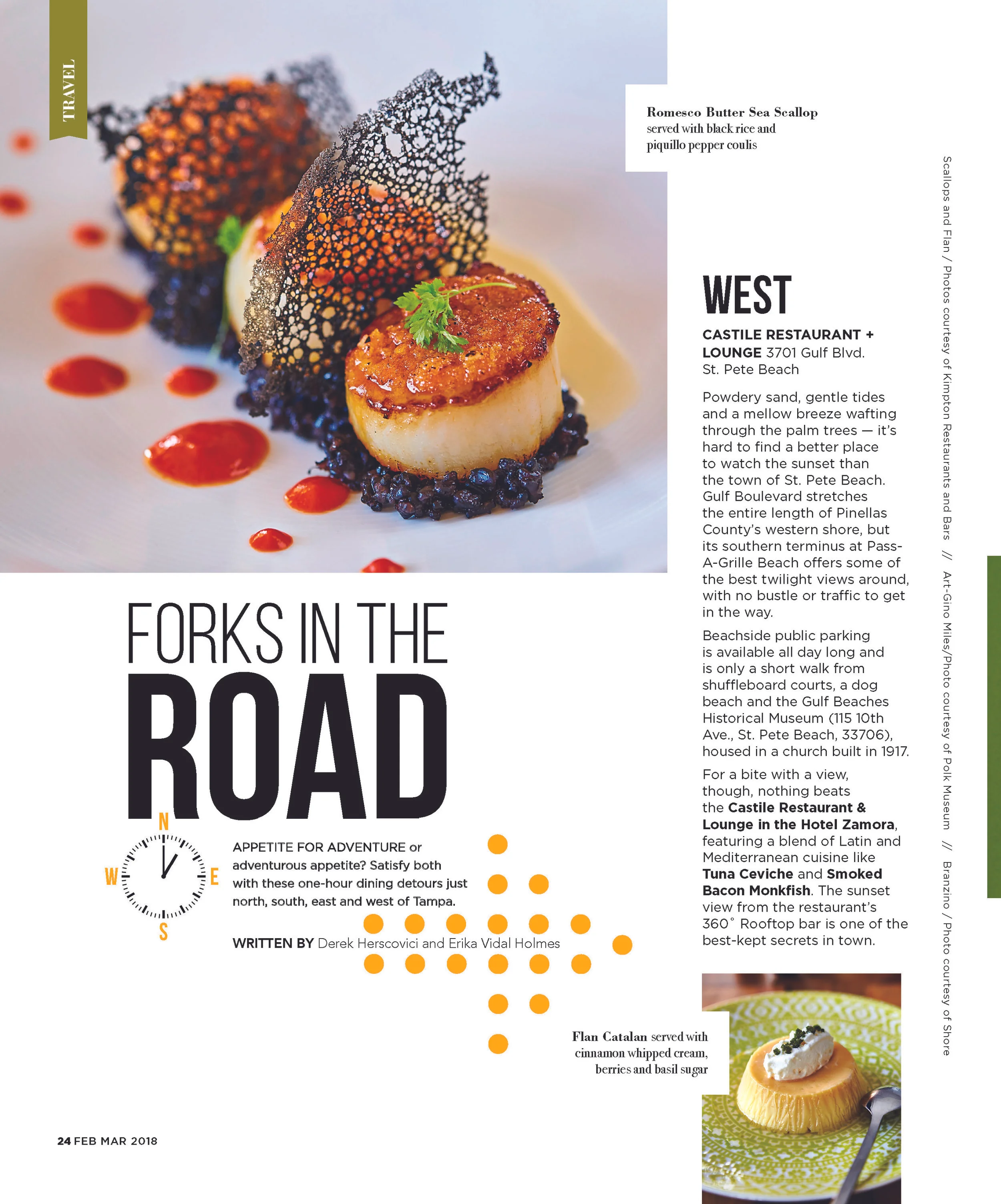
Appetite for adventure or adventurous appetite? Satisfy both with these one-hour dining detours just north, south, east and west of Tampa.

Columbus’ discovery of the New World in 1492 was an opportunity for battle-tested soldiers of the Reconquista to gain fame, glory and wealth expanding the Spanish empire. Conquering modern-day Cuba and Puerto Rico, the Spanish were intrigued by stories of a rich land to the north; little did they know they would encounter a civilization nearly as intractable and violent as their own. The story of the first people of Tampa Bay is eternally intertwined with that of the first European explorers.

Just like the ocean, Tampa’s seafood community is complex, diverse and always unpredictable. On any given night the same species of fish can be cooked a dozen different ways, a reflection of the city’s growing taste buds and tastemakers. To discover some of the city’s best seafood we asked five of Tampa’s top chefs what they order when they’re not on the job – and not in their restaurant.

TO A FLORIDA NATIVE, BEING CALLED A “CRACKER” IS A COMPLIMENT. It recalls the grit and tenacity of laboring cowboys who came generations before them, from which the nickname is derived. Many associate the cowboy with the “Wild West,” but few know that these bullwhip-toting ancestors shaped the landscape, history and economy that make Florida what it is today – and we’re proud to share the story of the term’s roots.

One of the most sought-after restaurant designers in the world, Ken Schwartz has made a living turning the abstract visions of iconic chefs into savory, fully functioning realities. Along the way his Tampa-based firm, SSA Foodservice Design + Consulting, has become the vanguard of adventurous eats, reputed as much for its dependability as its creativity.

September 26, 1918 – The Tampa, a United States Coast Guard Cutter ship, just finished leading a convoy of ships from the coast of Gibraltar to the Irish Sea and prepares to make its return journey in the Bristol Channel. The Tampa and its crew – 115 officers and men, many of whom were Tampa natives – would be lost, however, sunk by a German submarine torpedo as evening set on the Atlantic.

Interviews with Derrick Brooks, a former Tampa Bay Buccaneer and member of the NFL Hall of Fame; Joe Lopano, CEO of Tampa International Airport; Rick Thomas, Founder & CEO of Thomas Financial; Brian Lamb, CFO & President of Florida, Fifth-Third Bank

Parrots flew overhead just after midmorning, less than a block from the Anna Maria City Pier, the gentle Gulf breeze swaying the palm trees along Pine Avenue under a radiant sun. The bright green and feathered pandemonium danced above from one neighborhood jungle to the next, taking with them any reminder that this slender barrier island at the Southwestern mouth of Tampa Bay was roughly an hour’s drive from reality.
Good Grit Magazine
In the Fall of 2015 I contributed several features to the Birmingham-based Good Grit Magazine, my first actual paid and printed magazine work. While working on these assignments — particularly "From the Jailhouse to the Jukebox," about the Alan Lomax Blues Collection — I really learned to appreciate the complex history and heritage of the American South. At the same time I was able to write about the great things that are cropping up as a result of the "New South," from restaurants and farmer's markets to eco-tourism and dog-friendly dining options.
*Note: this listing is still being completed and will be updated as PDFs of the features are received
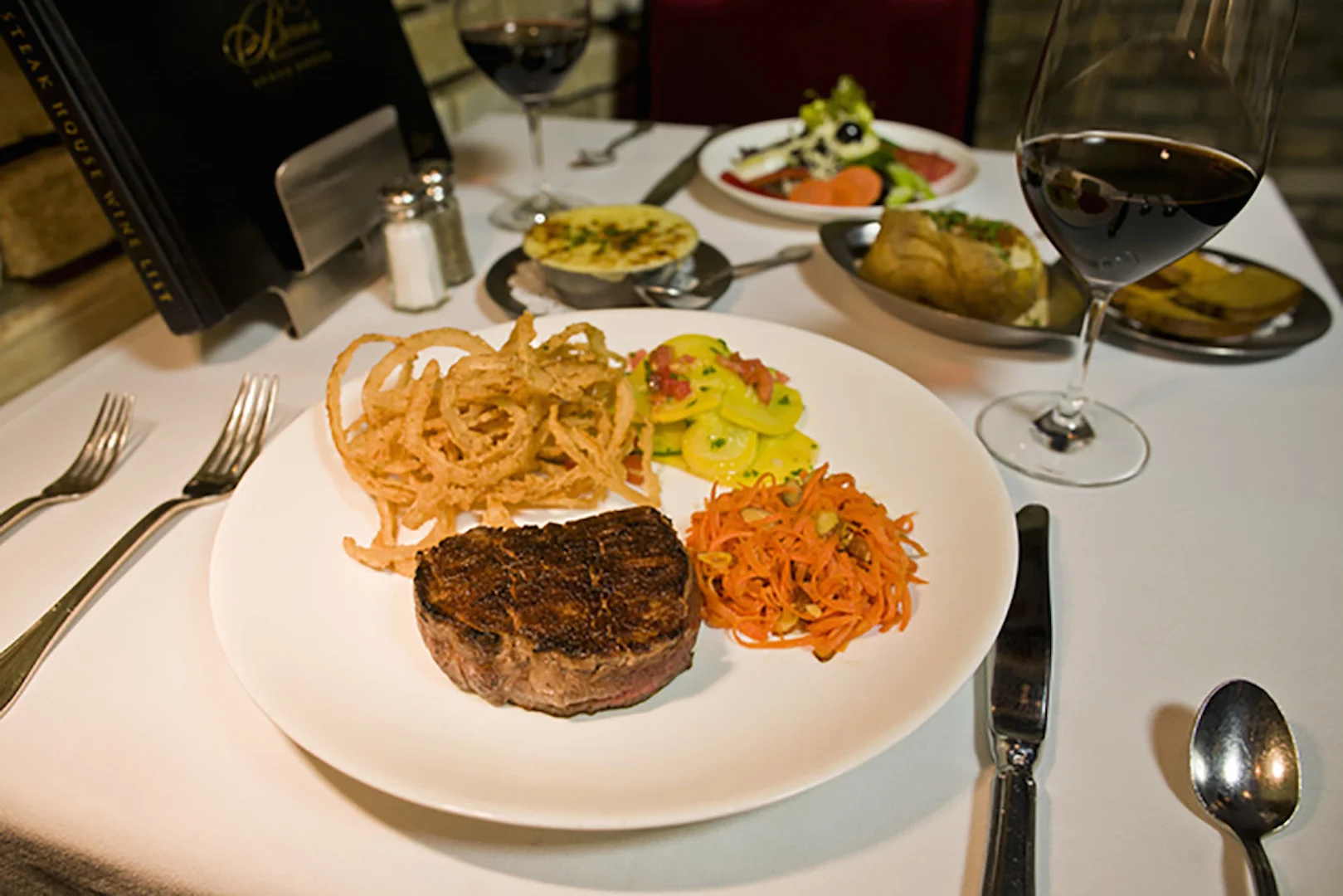
Writing about Bern’s Steakhouse is, more often than not, an exercise in futility. The internationally acclaimed, extravagantly adorned culinary experience is quietly nestled on South Howard Blvd. in Tampa, Fla., and is home to the largest private collection of wine in the world—one must truly see it to believe it.

In the past, if you wanted to shop for organic food, custom jewelry or home goods in downtown Orlando, you’d have to get in your car and drive across town to several separate locations. These days, downtown residents instead walk to the Orlando Farmers’ Market in Lake Eola Park, a one-of-a-kind open-air bazaar operating every Sunday from 10 a.m. to 4 p.m., rain or shine.

Life in the Great Depression-era Mississippi was a world apart from typical America; a land of sorrow and suffering but also intensely resilient, even today one of the least understood parts of American history. Here, among levee workers, sharecroppers, and former slaves, the music known as “the blues” lived—blood, sweat, and tears. Without the work of pioneering musicologists John and Alan Lomax, the music and lives of these musicians would have been lost to history, erased for want of attention and interest by a people unable to make themselves heard.
Deep South Magazine
Working for Deep South Magazine was my first real journalistic work after college — done while I was working two other, non-writing jobs — and as proud as I am of what I accomplished, I know my writing has come a long way since then. Still, I had a lot of fun finding unusual Southern things to write about, like awesome-yet-cheesy horror movies, my favorite Tampa neighborhood of Ybor City and an interview with my favorite living author Tim Dorsey. I got to take all my own photos, which was fun, if challenging. It's the story "Dining at the Crossroads of History," though, that I think holds up the best. I found the place on a chance drive to Miami and immediately knew I had to do a story on it — it's one of those places that no one knows about until you find it, but it needs to be shared with others. That's sort of the mentality I carry with me always.

If you take Highway 60 southeast, passing through first Bartow and then Lake Wales, you will enter the wild, almost endless marshes of South-Central Florida. Keep driving a bit further and you’ll find yourself at the only intersection for miles in every direction, a two-lane crossroad that geographically is both the center of everything and also the epicenter of nothing.
Its name is Yeehaw Junction and it has been the lonely home of the Desert Inn and Restaurant for more than 100 years, luring wayward travelers and curious tourists like a desert oasis that serves beer and hamburgers.

A carful of teenagers from out of town find themselves stranded in a rural town somewhere south of Dixie just before nightfall. The townspeople welcome them, eager to share their native traditions and rituals, complete with Confederate flags and “yeehaws.” When the teens feel uneasy and try to leave, the town becomes a veritable nightmare.

There are two versions of Florida. One consists of picturesque sunsets, sugar-sanded beaches, theme parks and tranquil suburban retirement promulgated by tourism bureaus and commercial advertisers.
The other is a near-apocalyptic mix of savage wildlife, ruthless grifters, con artists, disastrous weather and more historical trivia per square mile than you can wave a .44 magnum at.

Nestled on the eastern shore of Tampa Bay in central Florida is the nation’s oldest Cuban-American community.
After more than 50 years of political animosity, economic interference and cultural estrangement, Cuba and the United States have finally reestablished diplomatic ties. This means unrestricted travel to Cuba is hopefully in our near future, but for those who want a taste of the island now, Ybor City has the cigars, food and architecture on what is literally designated as Cuban soil.

In 1539, Spanish conquistador Hernando De Soto thought he had struck gold. Arriving on the shores of what is now Old Tampa Bay, the explorer found what he thought was the legendary Fountain of Youth, a series of five nearby mineral springs. Though native Tocobaga Indian mounds close by suggest that the spring waters at the north end of Tampa Bay have been inhabited by one group or another for thousands of years, De Soto believed that he was the first to “discover” them. He could not even believe that his adventurous, rambling predecessor, Ponce De Leon, the Fountain Story’s most emphatic believer, did not find it. On his way to further exploring the American Southeast, De Soto named the area Espiritu Santo Springs, or “Springs of the Holy Spirit.”

Few possessions seem to imbibe their previous owner’s personality more than used books. Habits, traits and wear can reveal a wealth of information about readers long after these books change hands.
It should come as no surprise, then, that Old Tampa Book Company — a repository of used and rare books spanning thousands of volumes downtown — should have its own story to tell.